
Managing a dental practice involves much more than treating patients. It also requires a smooth and efficient financial system. Dental Revenue Cycle Management is the process that ensures every service provided by a dental clinic is accurately billed, properly coded, and paid on time. When handled correctly, it helps dental practices avoid claim denials, reduce payment delays, and maintain a healthy cash flow.
As insurance policies grow more complex, dental practices can no longer afford billing errors or revenue gaps. A well-managed revenue cycle improves financial stability and allows dentists to focus more on patient care. This guide explains dental revenue cycle management and how it supports long-term growth and profitability.
What is Dental Revenue Cycle Management?
Dental Revenue Cycle Management is the process of handling all financial activities in a dental practice, from the moment a patient books an appointment to the final payment. It ensures that dental services are billed correctly and payments are received on time.
This process includes insurance verification, treatment coding, claim submission, payment posting, and patient billing. Each step works together to keep revenue flowing smoothly.
When dental revenue cycle management works well, practices experience fewer billing issues, faster payments, and better financial stability. It allows dentists to focus more on patient care and less on administrative stress.
Key Stages of Dental Revenue Cycle Management
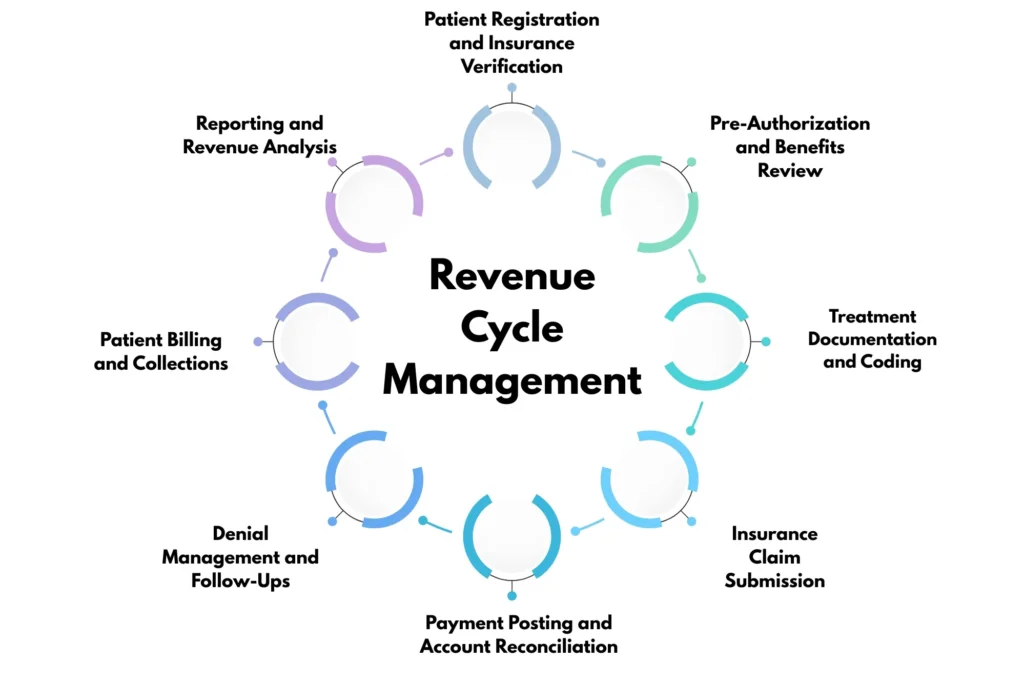
Dental Revenue Cycle Management consists of several connected stages that work together to ensure accurate billing, timely payments, and consistent cash flow. Each stage plays an important role in reducing revenue loss and maintaining financial stability for dental practices.
1. Patient Registration and Insurance Verification
The revenue cycle starts as soon as a patient books an appointment. Accurate collection of patient details and insurance information is essential at this stage. Insurance verification confirms eligibility, coverage limits, and plan requirements before treatment.
This process helps prevent claim denials, billing errors, and unexpected payment issues later in the cycle.
2. Pre-Authorization and Benefits Review
Some dental procedures require insurance approval before treatment. Pre-authorization ensures that the planned services align with the patient’s insurance benefits.
Reviewing benefits in advance improves transparency, sets clear financial expectations, and protects dental practices from unpaid procedures.
3. Treatment Documentation and Coding
Accurate documentation supports proper billing. Dentists and staff must record treatments clearly and assign correct dental procedure codes that follow payer guidelines.
Proper coding improves claim acceptance rates and ensures compliance with industry standards.
4. Insurance Claim Submission
After treatment, claims must be submitted accurately and on time. Clean claims include complete documentation, correct codes, and required attachments.
Submitting claims on time helps payments arrive faster and lowers the risk of denials or delays.
5. Payment Posting and Account Reconciliation
Once insurance processes a claim, payments and adjustments are posted to patient accounts. This stage involves tracking insurance payments, write-offs, and remaining patient balances.
Accurate reconciliation helps maintain reliable financial records and identifies underpayments quickly.
6. Denial Management and Follow-Ups
Claim denials can occur due to coding errors, missing information, or policy limitations. Denial management focuses on identifying the cause, correcting errors, and resubmitting claims promptly.
Regular follow-ups help recover revenue and prevent income loss.
7. Patient Billing and Collections
After insurance payments are applied, the remaining balance becomes the patient’s responsibility. Clear billing statements and organized follow-ups support timely collections.
Transparent communication improves patient understanding and reduces payment delays.
8. Reporting and Revenue Analysis
The final stage of dental revenue cycle management involves financial reporting and performance analysis. Reports help track revenue trends, identify bottlenecks, and improve decision-making.
Ongoing analysis strengthens financial planning and supports long-term practice growth.
Benefits of Effective Dental Revenue Cycle Management
A strong dental RCM system improves financial performance and helps streamline daily dental services.
- Faster insurance reimbursements
- Reduced claim denials and revenue loss
- Improved cash flow and financial stability
- Higher patient satisfaction
- Less administrative workload for dental teams
An efficient RCM system supports both financial health and operational efficiency.
Final Thoughts
Dental Revenue Cycle Management plays a key role in keeping a dental practice financially stable. When each step of the revenue cycle runs smoothly, practices face fewer problems, get paid faster, and maintain steady cash flow. This strong financial base also supports dental practice growth services that help practices grow and succeed.
By understanding and improving dental RCM processes with Built Easy Solutions, dental professionals can reduce administrative stress and focus more on patient care. A well-managed revenue cycle does not just support daily operations. It builds a stable foundation for long-term success.
FAQs
What is Dental Revenue Cycle Management?
Dental Revenue Cycle Management is the process of managing billing, insurance claims, payments, and collections in a dental practice. It ensures that dental services are billed accurately and payments are received on time.
Why is Revenue Cycle Management important for dental practices?
Dental RCM is important because it helps reduce claim denials, improve cash flow, and maintain financial stability. It also allows dental teams to focus more on patient care instead of administrative tasks.
What are the main stages of Revenue Cycle Management?
The main stages include patient registration, insurance verification, pre-authorization, treatment coding, claim submission, payment posting, denial management, patient billing, and financial reporting.
How does Dental RCM help reduce claim denials?
Dental RCM reduces claim denials by ensuring accurate insurance verification, proper documentation, correct coding, and timely claim submission.
How does Dental RCM affect patient billing?
Dental RCM ensures patient bills are accurate, clear, and timely, reducing confusion and improving payment compliance.