

Every successful dental practice depends on more than great clinical skills. Dental Revenue Cycle Management plays a crucial role in maintaining steady cash flow, accurate billing, and smooth insurance processing. When payments slow down or claims get denied, it directly affects revenue, growth, and overall practice stability.
A well-managed revenue cycle ensures you receive payments on time, reduce billing errors, and create a clear financial experience for patients. When your systems operate efficiently, you lower stress, improve profitability, and build a strong foundation for long-term success.
Powerful Ways to Improve Dental Revenue Cycle Management Process
In this blog, you will learn six practical ways to improve your Dental Revenue Cycle Management process and grow your practice revenue.
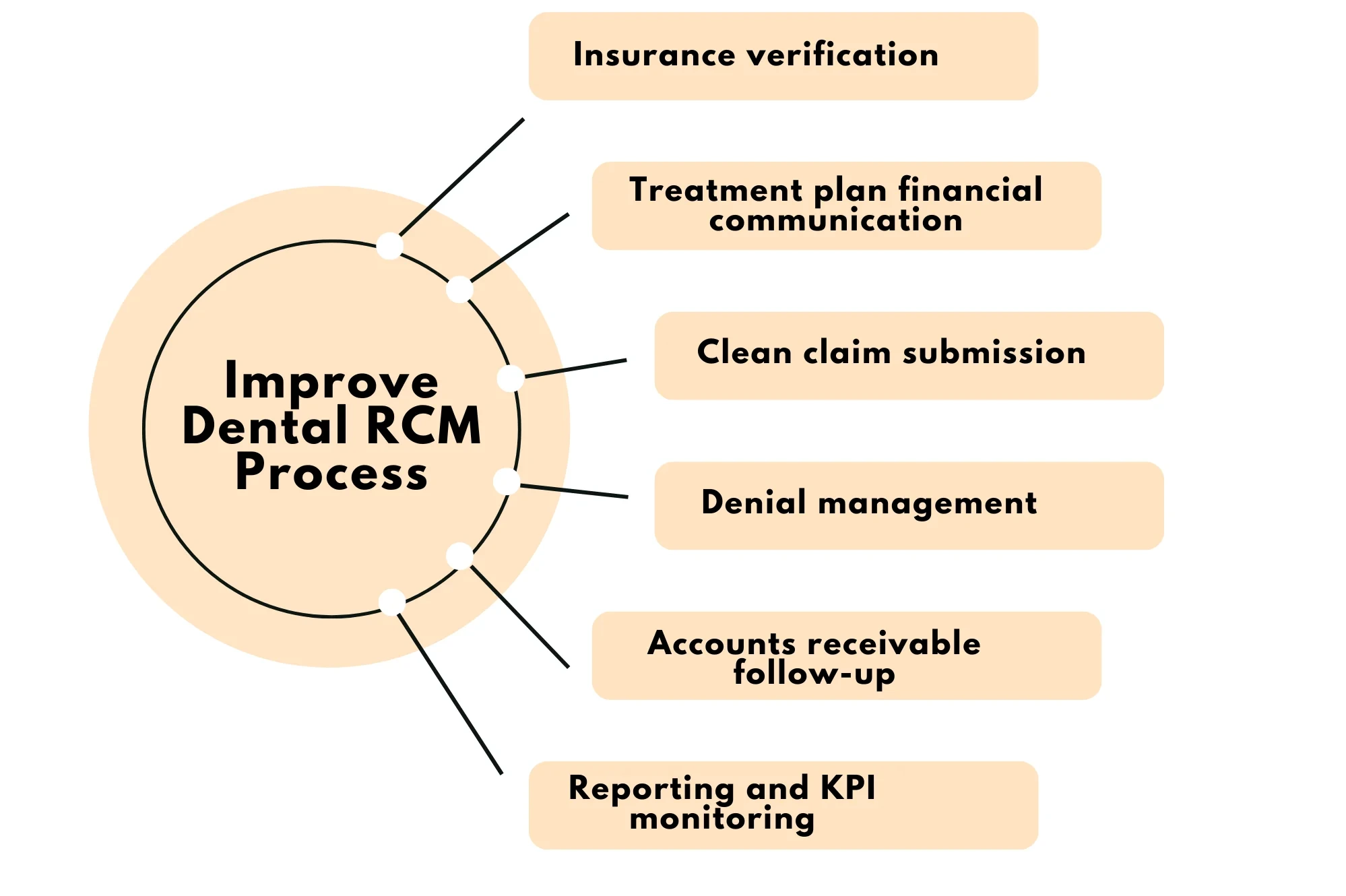
1. Verify Insurance Eligibility Before Every Appointment
Many revenue problems begin at the front desk. If your team does not verify insurance before the patient arrives, you risk claim denials and delayed payments.
Always confirm:
- Patient insurance eligibility
- Coverage details
- Annual maximums
- Deductibles
- Waiting periods
When you verify benefits in advance, you reduce billing errors and improve treatment acceptance. This step also builds trust because patients understand their financial responsibility before treatment begins.
2. Improve Treatment Plan Presentation and Financial Communication
Patients often delay treatment because they do not understand costs or payment options. Clear financial communication improves case acceptance and speeds up collections.
Train your team to:
- Explain treatment benefits clearly
- Break down costs in simple terms
- Offer flexible payment options
- Provide written cost estimates
When patients understand their payment responsibility, they are more likely to commit to treatment. This directly improves your Dental Revenue Cycle Management process.
Strong communication also reduces payment disputes later.
3. Submit Clean Claims Quickly and Accurately
Claim errors are one of the biggest reasons for delayed payments. Even small mistakes in coding or documentation can result in denials.
To improve your process:
- Submit claims within 24 hours of treatment
- Use correct CDT codes
- Attach required documentation (X-rays, narratives)
- Double-check patient information
Electronic claim submission speeds up reimbursements and reduces errors. Regularly audit your claims to identify patterns of denial and correct them.
The cleaner your claims, the faster you get paid.
4. Track and Reduce Claim Denials
Many practices write off denied claims instead of investigating them. This leads to significant revenue loss.
Instead, create a system to:
- Track denial reasons
- Categorize denials (coding errors, missing documents, eligibility issues)
- Assign responsibility for follow-ups
- Appeal denied claims promptly
Monitor your denial rate every month. If your denial rate exceeds 5–8%, your revenue cycle needs attention.
By actively managing denials, you recover lost revenue and improve overall financial performance.
5. Strengthen Accounts Receivable (AR) Management
Your Accounts Receivable report shows how long payments remain unpaid. If most of your AR is over 60 or 90 days old, cash flow problems will worsen.
Focus on:
- Reviewing AR reports weekly
- Following up on unpaid insurance claims
- Sending patient statements on time
- Calling patients for overdue balances
Set clear collection policies. Collect co-pays at the time of service whenever possible. The longer you wait, the harder it becomes to collect payments.
Healthy AR management keeps your practice financially stable.
6. Use Technology and Regular Performance Reporting
Modern dental practices use technology to improve efficiency and reduce human error. Practice management software helps automate billing, reporting, and tracking.
Use reporting tools to monitor:
- Collection ratio
- Production vs. collections
- Average reimbursement time
- Denial rate
- Net collection percentage
Review these numbers monthly. When you track key performance indicators (KPIs), you make informed decisions rather than guess.
Data-driven decisions strengthen your Dental Revenue Cycle Management process and improve profitability.
Why Improving Dental Revenue Cycle Management Matters
Improving Dental Revenue Cycle Management is important because it keeps your practice financially stable. When insurance verification, billing, and collections are handled correctly, you receive payments on time and reduce claim denials. This improves cash flow and allows you to focus more on patient care instead of chasing unpaid balances.
A strong revenue cycle also builds patient trust through clear communication and transparent billing. With the right systems and expert guidance from Built Easy Solutions, dental practices can reduce errors, increase collections, and create long-term financial growth.
Final Thoughts
Improving your Dental Revenue Cycle Management process does not require complex changes. Small improvements in insurance verification, claim submission, AR tracking, and team training can create significant financial results.
Start by reviewing your current system. Identify weak areas. Implement one improvement at a time. Monitor your performance consistently.
FAQs
What are common mistakes in Dental Revenue Cycle Management?
Common mistakes include failing to verify insurance before appointments, submitting incomplete claims, ignoring denied claims, and delaying accounts receivable follow-ups. These errors can slow down payments and reduce overall revenue.
What is the ideal net collection rate for dental practices?
Most healthy dental practices aim for a net collection rate of 95% or higher. A lower percentage may indicate billing errors, write-offs, or poor follow-up on unpaid claims.
How can dental practices improve cash flow quickly?
Practices can improve cash flow by submitting claims within 24 hours, reducing billing errors, following up on outstanding balances regularly, and offering convenient payment options.
What role does patient communication play in revenue cycle success?
Clear and transparent communication reduces confusion about treatment costs and payment responsibilities. When patients understand their financial obligations, they are more likely to pay on time.
How can front desk staff improve revenue cycle performance?
Front desk staff can improve performance by confirming insurance details, collecting co-pays at the time of service, explaining financial policies clearly, and maintaining accurate patient information.