
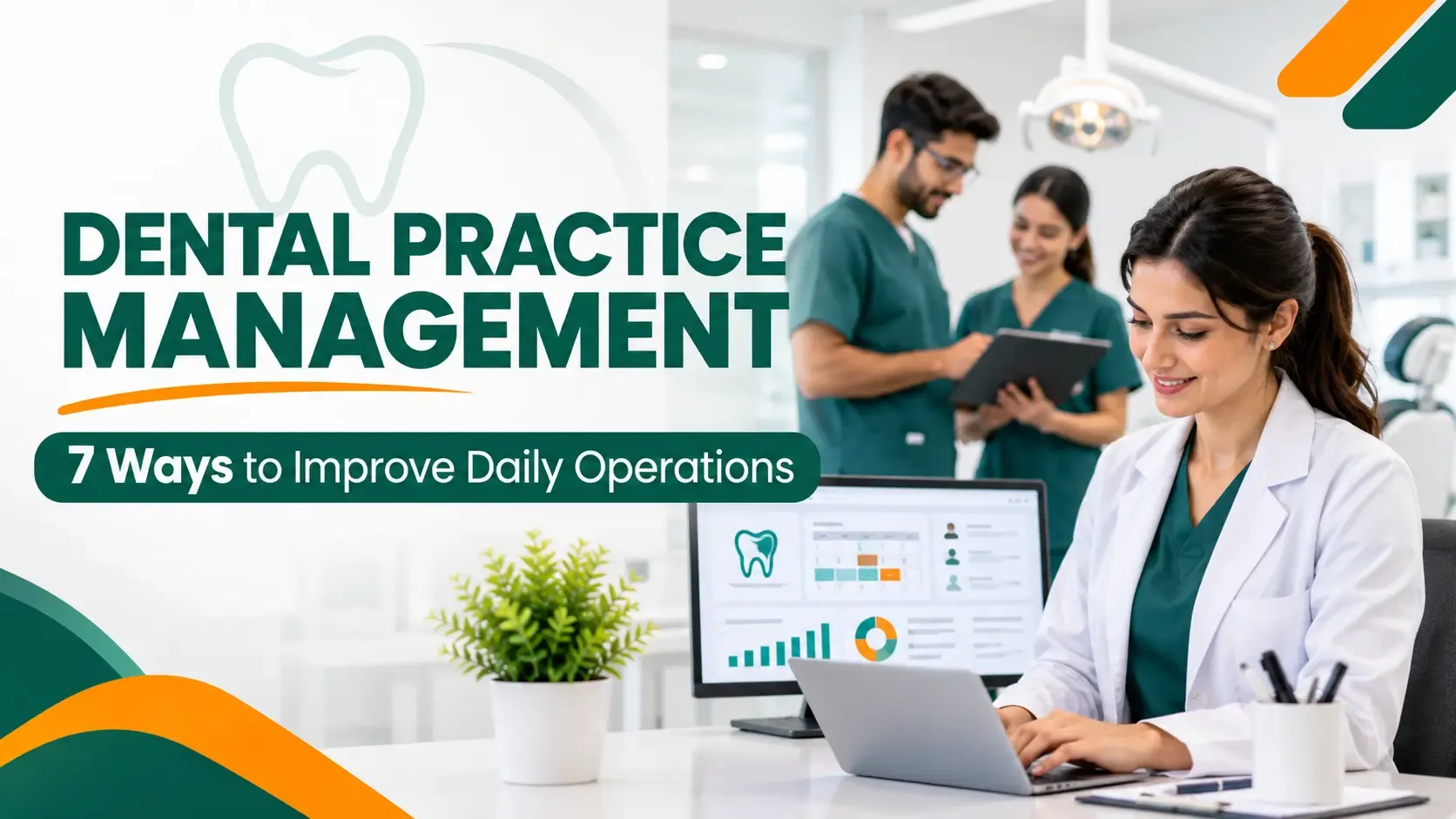
Daily dental operations depend on more than clinical skill. Scheduling, insurance, billing, and team coordination shape the patient experience. Dental Practice Management organizes these activities, while Dental Practice Management Services can help owners improve workflows and clarify responsibilities.
7 Ways to Improve Daily Dental Practice Operations
1. Standardize Daily Dental Office Workflows
Set a clear process for routine tasks, from the first call to checkout. Consistent steps reduce missed details and improve the patient experience.
Document procedures for:
- Booking, confirmations, and check-in
- Updating patient and insurance details
- Treatment handoffs and checkout
- Payments and follow-up visits
Assign each task an owner and define when to escalate problems. Update procedures when staffing, software, or policies change.
2. Improve Insurance Verification and Patient Eligibility
Verify coverage before the visit. Confirm eligibility, plan dates, frequency limits, deductibles, and benefits through the payer’s channels. Record the date and details checked.
A checklist helps staff catch missing information and explain estimated costs. Because coverage can change, clarify that estimates are not payment guarantees and confirm details with the insurer when needed.
3. Strengthen Dental Billing and Revenue Cycle Processes
Billing connects documentation, claim submission, payment posting, follow-up, and patient balances. Delays create rework. Revenue Cycle Management Services can assess these steps, while Dental Revenue Cycle Management Services may support specific workflows.
Build a routine to:
- Check notes and codes before submission
- Submit complete claims and check status
- Post insurer and patient payments accurately
- Follow up on unpaid claims and denials
- Review aging accounts receivable regularly
Review denial reasons for recurring documentation or eligibility problems. A defined Dental Revenue Cycle Management process makes outstanding work visible and sets follow-up priorities. Keep patient billing communication accurate and respectful.
4. Improve Patient Scheduling and Appointment Management
A full schedule is not always an efficient one. Match appointment lengths to procedures, allow turnover time, and maintain a short-notice list of patients open to earlier appointments.
Send reminders through approved channels and simplify rescheduling. Review missed visits and gaps by day or appointment type to identify changes needed in reminders, booking, or appointment lengths. Confirm the preferred contact method and follow consent requirements. For longer procedures, explain arrival instructions and expected visit length when booking so patients can plan ahead.
5. Improve Dental Team Communication and Accountability
Clinical and administrative teams need timely information. Use a morning huddle to review the schedule, complex visits, patient needs, and staffing concerns. Keep it action-focused.
Clarify who handles insurance questions, estimates, claim corrections, and follow-up. Record owners and deadlines in a shared task list or approved system to prevent duplicated or missed work.
6. Use Dental Practice Software More Effectively
Software supports scheduling, records, treatment plans, billing, and reporting when staff use it consistently. Review existing features before adding tools, and provide role-based training for common tasks.
Keep patient information accurate and current. Use reports to spot unconfirmed visits, incomplete claims, and overdue balances. Follow privacy, access, and security procedures. Avoid collecting duplicate information in separate places; decide which record is authoritative and correct errors promptly. Periodically review staff access so employees can see only the information needed for their roles.
7. Review Practice Performance and Improve Continuously
Track a few operational measures: appointment utilization, cancellations, no-shows, claim submission time, denial rates, days in accounts receivable, and payment delays. Define each measure consistently.
Review results regularly. Choose one recurring issue, identify its cause, assign an owner, and test a change. Measure the result before moving to another process. For example, if claims are often delayed, check whether notes, attachments, or eligibility details are missing before submission. A small audit can reveal the step that needs attention.
How Dental Practice Management Services Improve Operations
Role of Dental Consulting Services
An outside review can reveal process gaps. Dental Consulting Services may cover workflow assessments, role clarification, operational planning, performance reviews, and administrative recommendations. Scope should match the practice’s needs.
When comparing dental consulting companies in USA, ask about deliverables, recommendation methods, and progress measures. Choose guidance suited to the office’s staff and systems. Learn about Built Easy Solutions’ Dental Consulting Services.
Improving Revenue Cycle Management and Administrative Processes
Billing relies on accurate information moving between front-desk, clinical, and billing teams. Map each stage, identify handoff delays, and assign owners for unresolved claims. Explore Dental Practice Management Services for operational support.
Review Dental Revenue Cycle Management Services and the Dental Revenue Cycle Management process. When assessing dental revenue cycle management companies in USA, compare scope, reporting, communication, and exception handling. Retain practice oversight.
Conclusion
Daily operations improve through clear workflows, insurance checks, consistent billing, thoughtful scheduling, team accountability, effective software, and regular reviews. Start with one recurring problem, agree on a measurable change, and review the result. Built Easy Solutions can help assess operational and revenue cycle processes.
FAQs
What Is Dental Practice Management?
Dental practice management is the coordination of administrative, financial, staffing, and patient-service activities that keep a dental office operating. It includes scheduling, records, billing, communication, and performance monitoring.
How Can Dental Practices Improve Daily Operations?
Start by standardizing recurring workflows, verifying insurance early, reviewing claims regularly, and clarifying staff responsibilities. Track a few useful measures and address one repeated problem at a time.
What Do Dental Consulting Services Include?
They may include operational assessments, workflow recommendations, team role reviews, performance analysis, and planning for administrative improvements. The exact scope depends on the practice and its priorities.
When Should a Dental Practice Consider Professional Consulting?
Consider an operational review when scheduling gaps persist, claims remain unresolved, responsibilities are unclear, or growth creates pressure on existing systems. Consulting can help identify causes and set practical priorities.