
A patient arrives for an appointment, but their insurance verification is incomplete. The front desk assumes the billing team has checked it, while the billing team is waiting for updated patient information. Small communication gaps like these can interrupt daily operations and create unnecessary work.
Dental Practice SOPs (Standard Operating Procedures) help prevent such situations by giving employees clear instructions for completing routine responsibilities. From patient scheduling to insurance verification and claim processing, documented procedures establish how work should be handled across a dental office.
For US dental practices, well-developed SOPs also support staff accountability, administrative consistency, and organized practice management.
What Should a Dental Practice SOP Actually Include?
An SOP is a written document that explains how a particular task must be completed. It should be detailed enough for an employee to understand the process without repeatedly asking colleagues for instructions.
A useful SOP generally includes:
- Purpose: Why the procedure is necessary.
- Responsibility: Which employee or department handles it.
- Instructions: The exact steps involved.
- Documentation: What information needs to be recorded.
- Escalation: What to do when something goes wrong.
- Review date: When the procedure should be checked and updated.
For example, an insurance verification SOP should explain who checks eligibility, when verification takes place, which coverage details must be recorded, and how unresolved issues are communicated to the treatment coordinator.
How to Build SOPs Around Your Dental Office Workflows
Creating standard operating procedures for a dental practice requires more than writing instructions. The procedures must reflect how employees actually perform their responsibilities.
Follow this approach when developing your documentation.
1. Identify Processes That Need Clear Instructions
Start by observing daily activities and speaking with employees. Look for tasks that are frequently delayed, completed differently by different employees, or dependent on verbal communication.
Patient registration, appointment scheduling, treatment coordination, billing, and insurance verification are good starting points.
2. Assign Ownership to Each Process
Every procedure should have a clearly identified responsible person or department.
For example, the front desk may handle appointment scheduling, while the billing coordinator manages claim submissions and payment posting. The office manager can supervise these processes and monitor unresolved issues.
3. Document the Actual Steps
Write instructions in simple English and organize them in the order employees need to follow.
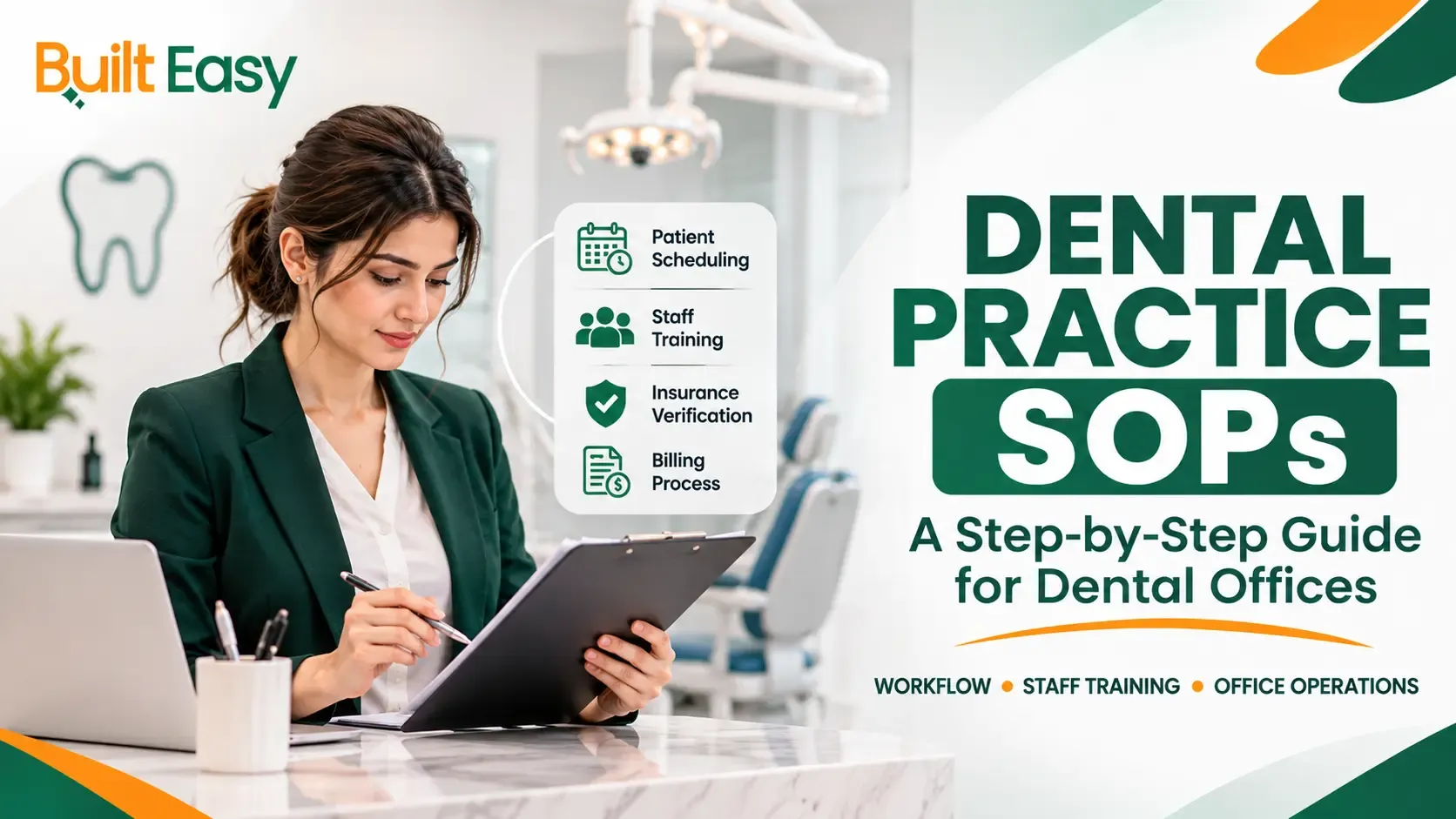
Consider a patient scheduling procedure:
- Confirm the patient’s contact information.
- Check provider availability and appointment requirements.
- Select the appropriate appointment duration.
- Enter the appointment into the practice management system.
- Send confirmation and any necessary instructions.
Avoid complicated language or unnecessary explanations. Employees should be able to understand the procedure quickly.
4. Test Procedures Before Implementation
Ask the employees responsible for the task to follow the written instructions. Check whether any steps are missing or difficult to understand.
Their feedback can help identify practical issues before the SOP becomes part of the office’s regular workflow.
5. Train Employees and Review Performance
Introduce new procedures through team meetings, demonstrations, and hands-on training. Include relevant SOPs in employee onboarding.
Office managers should periodically review whether employees are following the documented process and update instructions when operational requirements change.
5 Critical Areas That Need Written SOPs in a Dental Office
Not every dental office needs identical documentation. However, certain Dental Office SOPs are important for maintaining organized patient care and administrative operations.
1. Front Desk and Patient Scheduling
Document procedures for new patient registration, appointment booking, cancellations, rescheduling, patient check-in, and appointment reminders.
Clear Dental Patient Scheduling Procedures help front desk employees manage appointments consistently and communicate important information to clinical teams.
2. Insurance Verification and Treatment Coordination
The Dental Insurance Verification Process should explain when eligibility is checked, which coverage details are reviewed, and how verification results are documented.
For example, if insurance information cannot be confirmed before an appointment, the SOP should explain who contacts the patient and how the unresolved issue is handled.
3. Billing, Claims, and Payment Posting
Financial workflows need clearly documented responsibilities and review procedures.
Important Dental Billing Procedures should cover:
- Entering charges accurately.
- Reviewing and submitting insurance claims.
- Posting insurance and patient payments.
- Tracking outstanding claims.
- Following up on denied or unpaid claims.
These processes support more organized Dental Revenue Cycle Management and help the team identify billing issues before they become recurring problems.
4. Clinical Room Preparation and Infection Control
Clinical SOPs should document room preparation, instrument handling, sterilization procedures, equipment maintenance, and infection prevention.
These protocols must align with applicable CDC guidance, OSHA requirements, state regulations, and professional recommendations. Clinical procedures should be reviewed by appropriately qualified personnel.
5. Patient Records and Administrative Compliance
Document how employees access, update, store, and handle patient information. Include procedures for record requests, access permissions, and reporting potential privacy incidents.
US dental practices must ensure these procedures align with applicable HIPAA requirements and other relevant regulations.
Why Dental Practice SOPs Fail Even After Documentation
Some practices create detailed SOP manuals but struggle to implement them consistently. This usually happens when procedures do not match actual working conditions.
Common problems include:
- Employees are not properly trained.
- Instructions are too complicated or outdated.
- Responsibilities are unclear.
- Managers do not monitor implementation.
- Staff members continue using informal methods instead of documented procedures.
To avoid these issues, keep SOPs accessible, assign responsibility for each document, and review them regularly. A procedure should be practical enough to become part of everyday work rather than just another document stored in an office folder.
When Dental Practices Need Professional SOP Support
Developing procedures for multiple departments can be challenging, particularly when practice owners are managing staffing, patient care, and financial responsibilities simultaneously.
Professional Dental Consulting Services can help assess existing operations, identify workflow gaps, document responsibilities, and establish practical procedures.
Through structured Dental Practice Management Services, dental practices can improve administrative coordination, staff training, scheduling, and operational processes.
Consulting support can also strengthen Dental Revenue Cycle Management Services by reviewing claim submission, payment posting, denial management, and follow-up procedures.
The goal is to develop systems that suit the practice’s actual needs and help employees perform their responsibilities more consistently.
FAQs
What are the most important SOPs for a dental office?
Patient scheduling, insurance verification, billing, claim submission, infection control, patient records management, and employee onboarding are among the essential areas.
Who should create SOPs in a dental practice?
The practice owner or office manager can oversee SOP development, while department leads and employees should contribute practical information about their daily responsibilities.
How often should dental office SOPs be reviewed?
Review procedures regularly and whenever staffing responsibilities, software, workflows, or applicable regulations change. Clinical and compliance-related procedures may require more frequent review.
Can SOPs improve dental practice efficiency?
Yes. Clearly documented procedures help reduce confusion, establish accountability, improve employee training, and support consistent administrative workflows.