

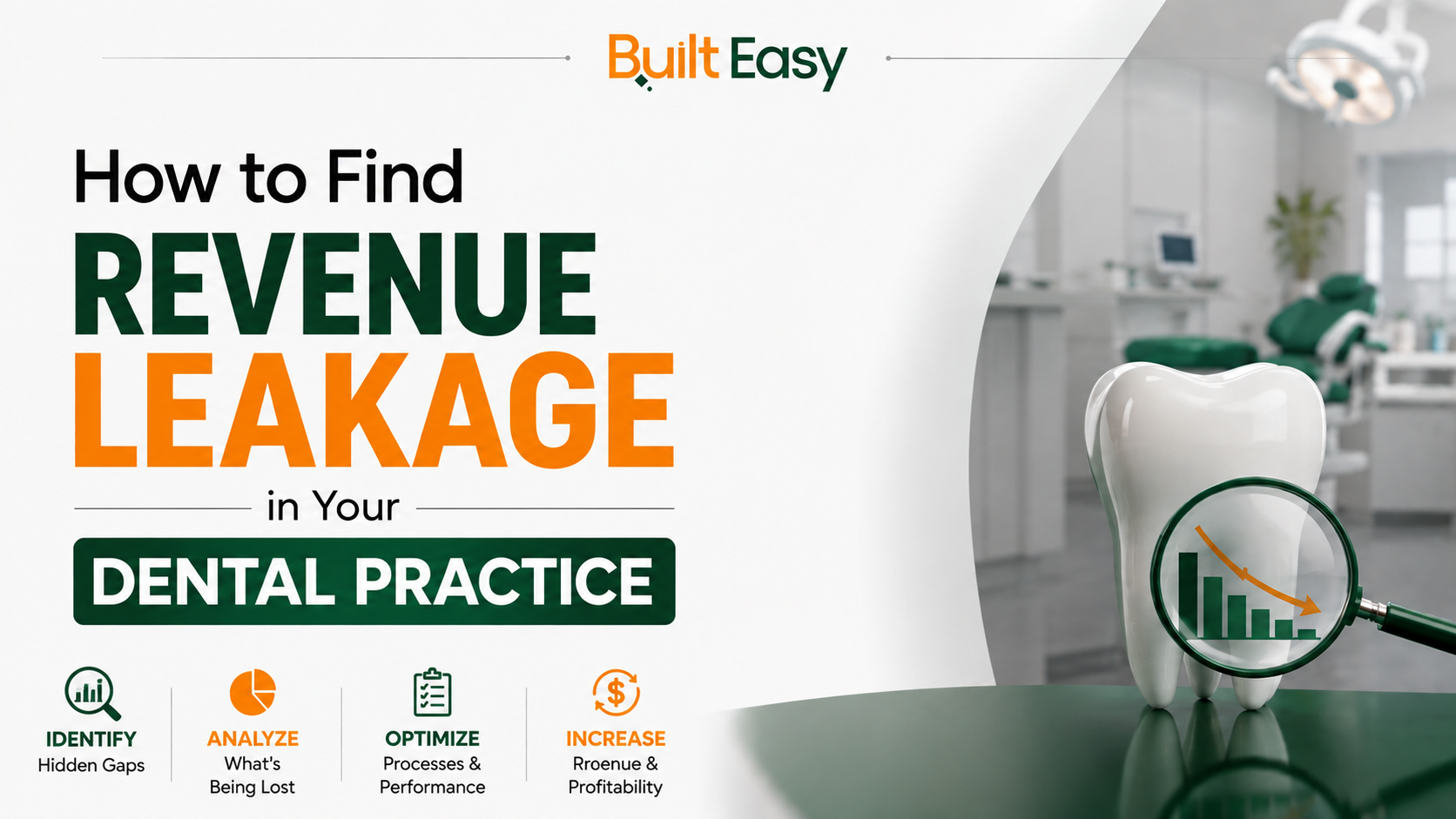
Revenue leakage is one of the most overlooked challenges in dental practices. A practice may have a steady flow of patients and strong production numbers, yet still lose revenue through billing errors, missed appointments, uncollected balances, claim denials, and inefficient processes.
The problem is that revenue leakage is not always obvious. Small losses occurring across different parts of a practice can add up to thousands of dollars over time. Identifying where money is being lost is the first step toward improving profitability and financial performance.
What Is Revenue Leakage in a Dental Practice?
Revenue leakage occurs when a dental practice provides services or generates revenue but fails to collect the full amount it should receive.
This can happen at several stages of the patient and billing journey. For example, a claim may be submitted incorrectly, a patient balance may not be followed up, or an appointment may be left unfilled after a cancellation.
Understanding these gaps can help practice owners protect revenue that is already being generated.
1. Review Your Accounts Receivable
Accounts receivable (A/R) is one of the first places to look for revenue leakage.
Review outstanding balances and identify how long they have remained unpaid. Pay particular attention to older accounts because the likelihood of collecting unpaid balances can decrease over time.
Look for:
- Unpaid insurance claims
- Outstanding patient balances
- Incorrectly posted payments
- Old accounts that have not been followed up
- Insurance payments that do not match expected amounts
Regular A/R reviews can reveal revenue that has already been earned but has not yet been collected.
2. Analyze Insurance Claim Denials
Claim denials can create significant revenue leakage for dental practices. When claims are rejected because of incorrect information, coding issues, missing documentation, or eligibility problems, payments can be delayed or lost.
Track your denial rate and identify recurring reasons for rejected claims. If the same problems appear repeatedly, the underlying billing workflow may need to be reviewed.
Professional Revenue Cycle Management Services can help practices identify billing inefficiencies, improve claim processing, and strengthen collection workflows.
3. Compare Production With Collections
Production tells you the value of services provided, while collections show how much money the practice actually receives.
If production continues to increase but collections do not grow at a similar rate, it may indicate a revenue leakage problem.
Practice owners should regularly compare:
- Gross production
- Adjusted production
- Collections
- Collection rate
- Accounts receivable
These numbers can provide a clearer picture of the practice’s financial health.
4. Track Missed Appointments and Cancellations
Empty appointment slots can represent lost revenue.
Monitor cancellations and no-shows to determine how frequently productive chair time is being lost. If certain days, providers, or appointment types consistently experience gaps, the practice can introduce better confirmation, reminder, waitlist, and scheduling processes.
Reducing unused chair time can improve revenue without necessarily increasing the number of patients entering the practice.
5. Check for Unbilled or Underbilled Procedures
Another common source of revenue leakage is failing to properly document and bill for services that were provided.
Review clinical documentation, procedure codes, treatment plans, and submitted claims to identify potential discrepancies. Consistent communication between clinical and administrative teams can reduce the risk of services being missed during the billing process.
6. Review Patient Balances and Payment Collection
Patient balances should be monitored consistently rather than only when they become significantly overdue.
Clear payment policies, convenient payment options, accurate statements, and timely follow-up can help improve patient collections.
Practices should also identify whether unpaid balances are related to unclear financial communication or weaknesses in the collection process.
How Dental Consulting Services Can Help Identify Revenue Leakage
Finding revenue leakage is not simply about looking at one financial report. It requires reviewing the entire practice workflow, from scheduling and treatment planning to documentation, billing, insurance claims, collections, and payment posting.
Professional Dental Consulting Services can help practice owners analyze these processes, identify inefficiencies, and develop strategies to improve financial performance.
For practices experiencing persistent billing or collection challenges, Dental Revenue Cycle Management can provide a structured approach to managing claims, accounts receivable, payment posting, and collections.
Final Thoughts
Revenue leakage can quietly reduce the profitability of an otherwise successful dental practice. By regularly reviewing accounts receivable, claim denials, production and collections, missed appointments, billing accuracy, and patient balances, practice owners can identify where money is being lost.
The goal is not simply to generate more revenue. It is to make sure the revenue your practice already earns is accurately billed, efficiently collected, and properly managed.
FAQs
What is revenue leakage in a dental practice?
Revenue leakage occurs when a dental practice loses revenue through issues such as unbilled procedures, claim denials, unpaid patient balances, billing errors, or missed appointments.
How can I identify revenue leakage in my dental practice?
Start by reviewing accounts receivable, claim denials, collection rates, missed appointments, payment posting, and the difference between production and collections. These areas can reveal where revenue is being lost.
What causes revenue leakage in dental practices?
Common causes include insurance claim denials, billing errors, uncollected patient balances, missed procedures, incorrect payment posting, appointment cancellations, and inefficient revenue cycle processes.
How can dental practices reduce revenue leakage?
Dental practices can reduce revenue leakage by improving billing accuracy, monitoring accounts receivable, following up on denied claims, reducing appointment gaps, reviewing payment posting, and regularly analyzing financial KPIs.
Can Revenue Cycle Management help reduce dental revenue leakage?
Yes. Effective Revenue Cycle Management can help identify billing inefficiencies, manage claims and accounts receivable, improve collections, and reduce avoidable revenue loss.