
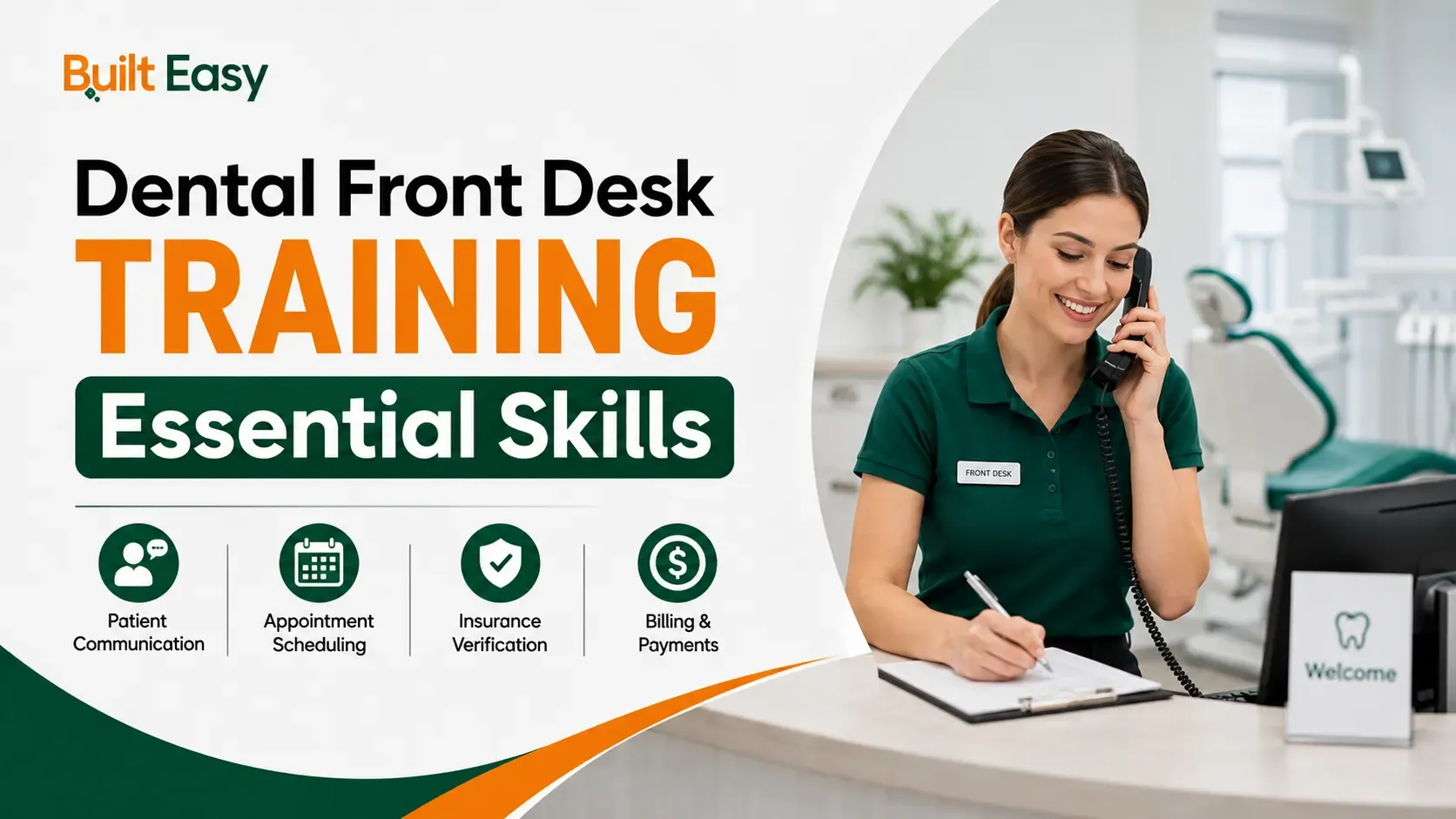
Your dental practice’s front desk is doing way more than just answering phones. These team members are handling patient appointments, verifying insurance, collecting payments, and managing the flow of information that keeps everything running. When they’re trained well, patients are happier, fewer billing mistakes happen, and your practice makes more money. When they’re not trained, things fall apart quickly; scheduling gets messy, insurance verification gets skipped, and you lose money through billing errors and claim denials.
Think of it this way: your front desk staff are the first people patients interact with. That moment sets the tone for everything else. A well-trained front desk is the foundation of strong dental practice management services.
Why Training Your Front Desk Staff Really Matters
A good front desk doesn’t just look organized. It directly impacts three things: patient happiness, your schedule efficiency, and your revenue.
Here’s what happens when your front desk team knows what they’re doing:
- Patients show up for appointments instead of no-showing
- Insurance issues get caught before treatment, not after
- Patients understand what they owe and pay on time
- Claims get submitted correctly and get paid faster
- Private patient information stays private
- When something goes wrong, it gets fixed quickly
When your team doesn’t have this training, you deal with frustrated patients, insurance rejections, unpaid claims, and staff frustration. Strong dental practice management services depend on a trained front desk that prevents these issues before they start.
The Skills Your Front Desk Team Actually Needs
Talking to Patients Like a Pro
Your front desk staff answer the phone first, greet patients in person, and often have the most human interaction with people. Strong communication means greeting patients warmly, explaining procedures without jargon, and handling concerns professionally.
Practical expectations include:
- Speaking in plain language patients understand
- Managing difficult conversations with empathy
- Setting realistic expectations about costs
- Following up on patient concerns promptly
When your team does this well, patients feel welcome and are more likely to stick with your practice.
Getting Appointments Right
Nothing wastes time like scheduling mistakes. A no-show, a double-booked operatory, or forgetting to call a patient for their recall appointment costs you real money.
Your team needs to know:
- How long different procedures take
- Which dentist or hygienist each patient prefers
- How to call or text to confirm appointments
- When a patient needs to be recalled
Simple appointment confirmations: a phone call or text 24 hours before cut no-shows in half.
Insurance Verification and Eligibility
Insurance verification is critical before treatment begins. Front-desk staff must know how to:
- Verify active coverage and effective dates
- Identify copayments, deductibles, and annual maximums
- Explain out-of-pocket costs to patients
- Flag pre-authorization requirements
- Document verification in patient records
Proper dental insurance credentialing services practices start with accurate front-desk verification. When this happens before treatment, claim denials and patient billing disputes drop significantly.
Dental Billing and Payment Collection
Front-desk staff are often first to discuss payment. They should understand:
- How to explain patient balances clearly
- Accepted payment methods and security
- How to discuss payment plans or financing options
- When to escalate billing questions
- How to document payments and adjustments
Strong dental billing services begin with front-desk staff who can answer basic patient questions confidently. Collecting payment upfront prevents billing disputes later.
Understanding Your Revenue Cycle
Front-desk staff should understand how their work connects to overall dental revenue cycle management. The revenue cycle management for dental practices includes:
- Scheduling and registration (front-desk responsibility)
- Insurance verification (front-desk responsibility)
- Treatment delivery
- Claims submission
- Payment processing
- Follow-up on unpaid claims
When front-desk staff understands this flow, they catch problems early. A missing insurance ID causes claim rejections downstream. Dental RCM services in USA emphasize how critical front-desk accuracy is to the entire revenue cycle.
Claims and Documentation
Accurate patient information prevents claim denials. Front-desk staff should:
- Verify patient demographic information at every visit
- Confirm insurance details before treatment
- Ensure patient signatures are complete
- Flag missing information before claims are submitted
Claim denial management services recover unpaid claims, but prevention starts at the front desk. Most denials result from data entry errors that could have been caught during registration.
HIPAA Awareness and Patient Privacy
Patient privacy isn’t negotiable. Front-desk staff should know:
- How to handle patient records securely
- When they can discuss treatment with others
- How to protect patient information in the waiting room
- How to handle patient communications safely
HIPAA violations carry real penalties. Training should emphasize practical privacy practices.
How Front Desk Training Supports Your Revenue
Well-trained front-desk employees directly improve financial health:
- Fewer no-shows = more production
- Better insurance verification = fewer claim denials
- Accurate patient data = faster payment processing
- Improved payment collection = better cash flow
- Fewer mistakes = less time spent fixing problems
- Happier patients = more referrals and retention
When your front desk operates smoothly, your entire practice performs better. This is why dental practice management services increasingly recognize that front desk excellence drives revenue.
How to Build an Effective Training Program
Here’s a practical plan:
Step 1: Identify Skill Gaps
Observe your front desk for a week. Document scheduling errors, missed insurance verification, and billing questions.
Step 2: Create Procedures
Document how every common task should be completed. Write procedures for scheduling, insurance verification, payment collection, and patient communication.
Step 3: Train on Patient Communication
Begin with the skills patients experience first. Role-play difficult scenarios.
Step 4: Train on Insurance and Billing.
Walk them through how insurance works. Do practice calls together.
Step 5: Teach Revenue Cycle Fundamentals
Explain how scheduling → insurance verification → claims → payment all connect together.
Step 6: Practice Real Scenarios
Use actual patient situations from your practice. Let them practice in a safe environment.
Step 7: Provide Monthly Feedback
Check metrics like insurance verification rates and payment collection. Give specific feedback.
Step 8: Provide Ongoing Training
Schedule quarterly refreshers. Insurance requirements and compliance standards change regularly.
Training Checklist
| Skill | What They Should Know |
|---|---|
| Patient Communication | Be friendly, explain costs, and handle upset people |
| Scheduling | Book correctly, confirm appointments, and reduce no-shows |
| Insurance Verification | Verify coverage and explain patient responsibility |
| Billing & Payments | Process securely, explain balances, and offer payment plans |
| Revenue Cycle | Understand how scheduling and insurance affect payment |
| Privacy & HIPAA | Keep information private, follow the law, and report breaches |
| Documentation | Get patient information right and catch mistakes early |
| Teamwork | Communicate effectively with clinical and billing teams |
Conclusion
Your dental front desk does critical work. They’re the first impression, the insurance gatekeeper, and a key part of whether your practice gets paid. Strong dental practice management services depend on a trained front desk that understands insurance verification, dental revenue cycle management, and dental billing services fundamentals.
Training your front desk isn’t optional; it’s how you protect your practice’s reputation and money. When these team members know what they’re doing, everything runs better. If you’ve never given your front desk formal training, start now. The return on that investment appears quickly in fewer mistakes, faster payment, and happier patients.
FAQs
What skills does a dental front desk employee need?
Strong communication, organizational ability, and attention to detail. They need to understand scheduling, insurance verification, HIPAA compliance, and basic billing. Understanding how their work connects to dental revenue cycle management is equally important.
Why is front desk training critical?
Because front-desk staff are the first patient contact. They verify insurance, collect money, and handle the information that claims depend on. Poor training leads to scheduling errors, billing mistakes, and lost revenue.
What should staff know about insurance?
They should verify coverage before treatment, understand copayments and deductibles, explain patient responsibility clearly, and flag pre-authorization requirements. Proper insurance verification prevents claim rejections.
Should front desk staff understand revenue cycle management?
Yes. They should understand how revenue cycle management for dental practices works that accurate front-desk data leads to successful claims and payment. This awareness helps them prioritize accuracy.
How does training reduce billing errors?
Most billing mistakes start at the front desk. Proper training ensures complete, accurate patient information is captured at registration. Claim denial management services recover lost revenue, but prevention at registration is better.
How often should front desk staff receive training?
New hires need comprehensive training. Quarterly refreshers keep your team current with software changes, insurance updates, and compliance requirements.