
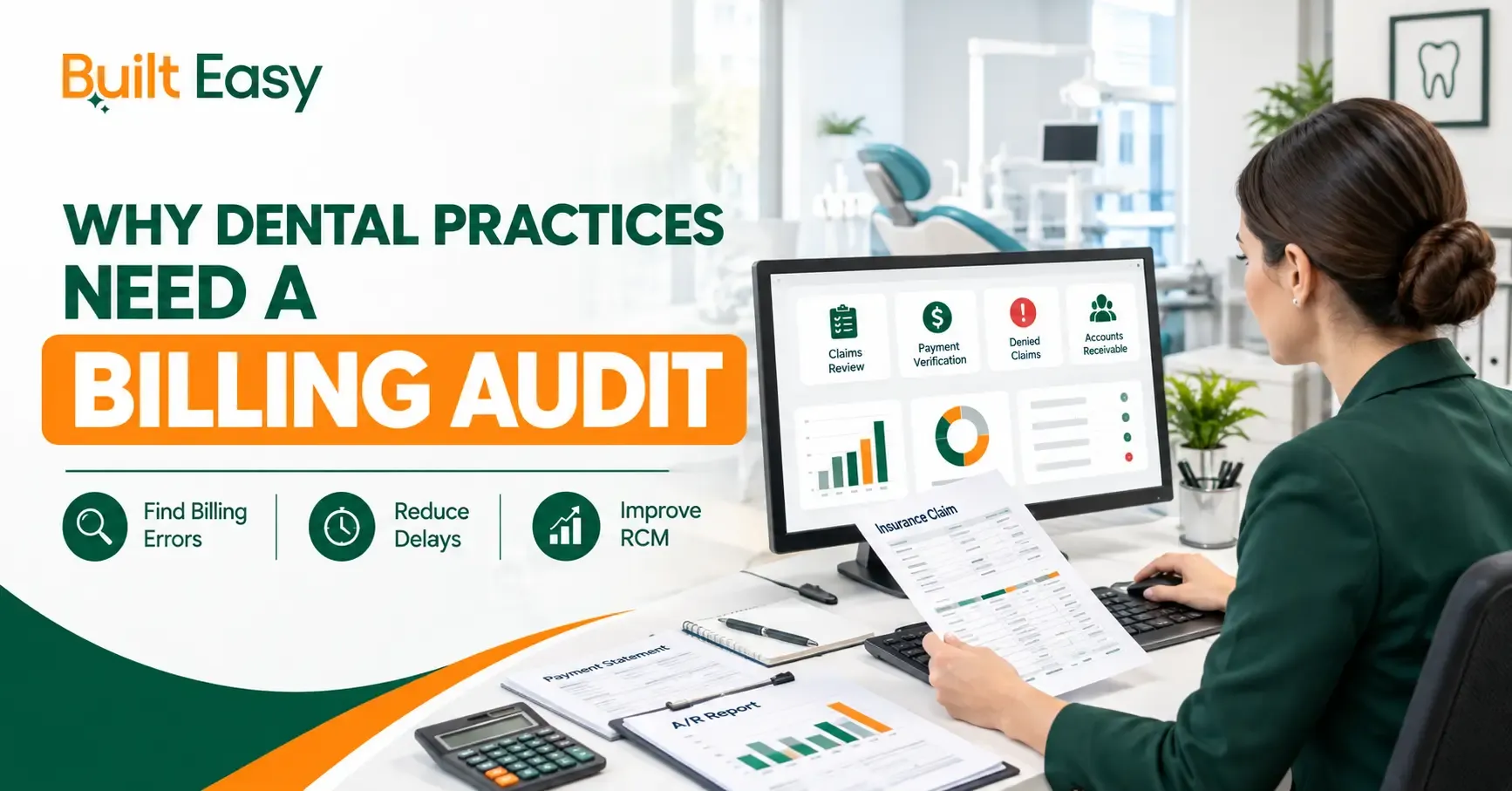
A dental practice can have a full schedule and strong production numbers while still losing revenue through billing problems. Missing claims, billing errors, incorrect insurance payments, denials, aging A/R, and unresolved balances can quietly affect cash flow and create extra work for the billing team. A dental billing audit provides a structured way to examine where these problems occur and why they keep happening. Rather than reviewing claims individually and moving on, an audit looks at the broader billing process. With the right review, Dental Billing Services and internal teams can identify gaps that may otherwise remain unnoticed and make practical improvements to the practice’s revenue cycle.
What Is a Dental Billing Audit?
A dental billing audit is a systematic review of a practice’s billing, claims, payments, accounts receivable, and related workflows to identify errors, delays, and process gaps. It may include reviewing patient information, submitted claims, insurance responses, payment posting, adjustments, denials, and outstanding balances.
A billing audit goes beyond checking whether claims were submitted. It examines what happened after submission and whether the practice received the payment it expected. This broader review can show where revenue is being delayed, lost, or unnecessarily tied up in A/R.
What Does a Dental Billing Audit Check?
A useful audit should follow the complete path from patient billing through insurance payment and A/R follow-up.
1 . Claim Submission and Billing Accuracy
An audit can identify missing claims, incorrect patient information, billing or coding errors, incorrect claim details, and delayed submissions. It may also uncover duplicate or incorrectly submitted claims that create additional work.
Even a small data or billing error can delay processing. When the same mistake occurs repeatedly, correcting individual claims may treat the symptom without fixing the process that caused it.
2 . Insurance Payments and Underpayments
The audit can compare expected insurance reimbursements with payments actually received. This helps identify underpayments, incorrect adjustments, payment-posting issues, and unresolved discrepancies.
For example, if an insurance payment does not match the expected amount, the issue should not simply disappear into an adjustment. Reviewing these discrepancies can help the practice determine whether the payment was posted correctly and whether additional follow-up is needed.
3 . Denied and Rejected Claims
Dental claims can be denied or rejected because of missing information, eligibility issues, coding problems, documentation gaps, or other claim-specific errors. An audit can reveal whether certain denial reasons appear repeatedly.
Repeatedly resubmitting a claim may not solve the underlying problem. Reviewing denial patterns can help determine whether the practice needs a workflow change, better claim review, or additional Claim Denial Management Services.
4 . Accounts Receivable and Aging Claims
A billing audit also examines outstanding balances and aging A/R. It can identify claims that have not been worked, delayed follow-ups, unresolved balances, and revenue that has remained in accounts receivable longer than expected.
This review is an important part of Revenue Cycle Management for Dental Practices because it shows where revenue is getting delayed and whether the current follow-up process is working consistently.
Why Dental Practices Should Consider a Billing Audit
You do not need to overhaul the entire financial process after noticing one warning sign. Start with the areas where the numbers are changing.
1. Find Revenue Leakage
Revenue leakage does not always come from one big mistake. A practice may have several smaller issues, such as missed follow-ups, incorrect adjustments, underpayments, or unworked claims. Over time, these issues can accumulate.
For example, a practice may discover during an audit that several older claims were submitted but received little or no follow-up. The audit does not automatically recover every dollar, but it gives the practice a clearer view of where revenue may be getting delayed.
2. Identify Recurring Billing Errors
Finding the same error across multiple claims is more useful than correcting each claim separately. If patient information is frequently entered incorrectly or certain claim details are repeatedly missed, the practice can examine the workflow behind those errors.
This shifts the focus from individual corrections to process improvement.
3. Reduce Avoidable Claim Denials
An audit can identify recurring denial patterns and help the practice understand their causes. If the same eligibility, coding, documentation, or submission issue appears repeatedly, management can address the process responsible.
An audit cannot eliminate every denial, but it can help reduce avoidable problems by making recurring issues visible.
4. Improve A/R Visibility
Aging reports can show how much money is outstanding, but an audit can provide additional context. It can reveal which claims remain unresolved, whether follow-ups are happening consistently, and where older balances are accumulating.
Better visibility allows practice leaders to understand whether A/R problems are isolated or connected to broader billing workflows.
5. Strengthen Billing Processes
Audit findings can support improvements in staff workflows, claim review procedures, payment posting, follow-up processes, and internal accountability. These improvements are an important part of Dental Revenue Cycle Management because consistent processes make billing performance easier to monitor and manage.
How Often Should a Dental Practice Conduct a Billing Audit?
There is no single audit schedule that fits every dental practice. Frequency can depend on practice size, claim volume, insurance mix, A/R performance, internal billing resources, staff changes, and recent changes to billing processes.
A practice experiencing frequent denials, growing A/R, or recurring billing errors may benefit from reviewing its billing processes more often. Practices with stable workflows may choose a less frequent comprehensive audit while still monitoring key billing indicators regularly.
The important point is to use audit frequency that matches the practice’s needs rather than following an arbitrary schedule.
Signs Your Dental Practice May Need a Billing Audit
Consider a billing audit if your practice is experiencing:
- Increasing A/R
- Frequent claim denials
- Unexplained payment discrepancies
- Claims remaining unresolved for long periods
- Frequent billing corrections
- Revenue that does not match expected production or collection patterns
- Limited billing performance reporting
- Staff spending excessive time correcting billing problems
These signs do not necessarily indicate one specific cause. They do, however, suggest that a closer review may be worthwhile.
How Billing Audit Findings Can Improve Dental RCM
An audit becomes useful when its findings lead to action. A practical process is
- Identify the problem: Determine what is going wrong and where it occurs.
- Find the root cause: Look beyond the individual claim to the workflow or process involved.
- Prioritize issues: Address problems based on their frequency, impact, and urgency.
- Correct the process: Update workflows, claim review procedures, follow-up steps, or staff responsibilities.
- Track results: Continue monitoring billing, denials, payments, and A/R to determine whether the changes are working.
For practices with limited internal resources, professional Dental Revenue Cycle Management Services can provide additional support with recurring billing and RCM issues. External Dentist Revenue Cycle Management support may be useful when staff do not have enough time or resources for consistent follow-up and process review.
When Should a Practice Consider Professional Support?
Professional support may be worth considering when a practice has high claim volume, persistent denials, growing A/R, limited billing staff, repeated billing errors, or difficulty tracking billing performance.
It can also help when staff lacks time for consistent claim follow-up or when several revenue-cycle problems remain unresolved at the same time. In these situations, Dental Practice Management Services may complement the practice’s internal efforts by helping organize workflows and identify areas that require attention.
The goal should be better visibility and stronger processes, not simply outsourcing every billing responsibility.
Conclusion
A dental billing audit is more than a search for individual claim mistakes. It provides a broader view of how claims, insurance payments, A/R, denials, and billing workflows work together. By identifying recurring problems and their root causes, a practice can improve follow-up, strengthen internal processes, and gain better visibility into its revenue cycle. Whether the review is handled internally or with professional support, regular attention to billing performance can help dental practices make more informed decisions about Dental Revenue Cycle Management.
FAQs
What is a dental billing audit?
A dental billing audit is a structured review of billing, claims, insurance payments, A/R, and related workflows. It helps identify errors, delays, payment discrepancies, recurring denials, and process gaps that may affect revenue collection.
What does a dental billing audit check?
A dental billing audit typically checks claim accuracy, submission timing, insurance payments, adjustments, denials, payment posting, outstanding balances, aging A/R, and follow-up activity. The exact areas reviewed can vary based on the practice’s billing processes and known concerns.
How often should a dental practice conduct a billing audit?
Audit frequency depends on factors such as claim volume, practice size, insurance mix, A/R performance, staffing, and billing problems. A practice with recurring denials or aging A/R may need more frequent reviews, while a stable practice may use periodic comprehensive audits with ongoing monitoring.
Can a billing audit help reduce claim denials?
Yes, a billing audit can identify recurring causes of denials, such as missing information, eligibility issues, or documentation problems. Addressing those patterns may reduce avoidable denials, although an audit cannot guarantee that all future claims will be approved.
Why is billing auditing important for dental practices?
Billing auditing is important because it gives practices a clearer view of billing accuracy, payment discrepancies, A/R, denial patterns, and workflow problems. It can help management identify where revenue is delayed and where billing processes may need improvement.